
"wild arabica"
2000 article(s) found

"acidity", "quality" and "flavor" of Ethiopia's Bancimagi Coffee Manor
Ethiopia is the birthplace of the famous Arabica coffee beans, and people have always maintained the tradition of harvesting wild coffee beans. The coffee garden at an altitude of more than 1500 meters has formed a unique coffee style after thousands of years of evolution and adaptation. Ethiopian coffee grown in the natural wild environment is called wilderness coffee, which retains the most primitive and natural taste of coffee beans.

Which part of the world is the best place to grow coffee trees?
A survey by the Royal Botanical Gardens in London has found that climate change is having an impact on the coffee people depend on. Coffee trees will gradually die out with climate change, such as Arabica, the most popular coffee variety, which is likely to disappear by 2080. According to a survey by British scientists, it is only the wild coffee trees that are more likely to die out.

Wild flavor Ethiopian coffee bean varieties taste manor production area treatment method grinding engraving degree introduction
Ethiopian Coffee Bean Variety Taste Manor Regional treatment Grinding scale introduces Ethiopian Sidamo is a type of single origin that grows in Arabica coffee in Ethiopia's Sidamo province. Like coffee in most African countries, Ethiopian Sidamo is characterized by small gray beans, but characterized by its rich, spicy, wine or chocolate-like taste and floral aroma.

Arabica Coffee Bean Flavor Description Taste Treatment Variety Characteristics Grinding Scale Introduction
Arabica coffee beans flavor description taste treatment variety characteristics grinding scale introduction Arabica coffee is still the most important coffee variety, accounting for about 3/4 of the world's total coffee production. It is cultivated mainly in Latin American countries, but also in Indonesia and the Pacific islands. Brazil, the world's largest coffee producer, has geographical and climatic conditions that are ideal for the growth and cultivation of Arabica coffee.

Introduction to the grade of Ethiopian coffee
Ethiopia is the birthplace of the famous Arabica coffee beans, and people have always maintained the tradition of harvesting wild coffee beans. The coffee garden at an altitude of more than 1500 meters has formed a unique coffee style after thousands of years of evolution and adaptation. Ethiopian coffee grown in the natural wild environment is called wilderness coffee, which retains the most primitive and natural taste of coffee beans.

Ethiopian Coffee beans Yega Chefe Coffee and Sidamo Coffee
Ethiopia is the birthplace of the famous Arabica coffee beans, and people have always maintained the tradition of harvesting wild coffee beans. The coffee garden at an altitude of more than 1500 meters has formed a unique coffee style after thousands of years of evolution and adaptation. Ethiopian coffee grown in the natural wild environment is called wilderness coffee, which retains the most primitive and natural taste of coffee beans.

What are the producing areas of mocha coffee? what are the flavor and taste characteristics of Ethiopian mocha coffee?
Professional coffee knowledge exchange more coffee bean information please pay attention to the coffee workshop (Wechat official account cafe_style) Ethiopian mocha coffee has a unique wild flavor and fresh aroma, coupled with glycol bitterness, rich and smooth taste, sweet fruit can also be found in the finish. Ethiopia, the birthplace of coffee, was also the birthplace of the Suoman dynasty. In

Introduction to the requirements of natural conditions in the growth process of wild coffee
Introduction to the requirements of natural conditions in the growth process of wild coffee in fact, the Arabs began to grow coffee in 525 BC, and chewing fried coffee beans became popular in the Arab region. In 890 AD, Arab merchants sold coffee beans to Yemen, and Yemenis made coffee beans into drinks for the first time. In the 15th century, coffee was introduced into Europe and Asia, and soon into the United States.

Ethiopia Yega Coffee Coffee producing area, Sidamo Province, Sidamo Gedeo District?
Today, Ethiopia is an important coffee producer, with about 12 million people engaged in coffee production and a major exporter of Arabica coffee beans in Africa. The high-quality coffee here is of excellent quality and is worth looking for. A variety of coffee cultivation methods can be found in Ethiopia: from wild coffee forests and semi-developed land

Is mandailing Kopi Luwak wild? How much is the manor Kopi Luwak?
Professional coffee knowledge exchange more coffee bean information please follow the coffee workshop (Wechat official account cafe_style) MANDAILING ESTATE COFFEE Coffee Manor is located in Manning area 1550 meters above sea level Golden Monkey Mountain. There is a typical tropical rain forest climate and a complete ecosystem. The coffee here is a typical once-famous Manning coffee. Here

Is Arabica better than Robusta?
Professional barista communication, please pay attention to coffee workshop (Weixin Official Accounts cafe_style) I believe many friends have read a news: Arabica is on the verge of extinction. Because of the weather, wild arabica will be extinct in the wild by 2080, meaning there will be no good coffee to drink by then. So the question is, why?
Is Arabica really more advanced than Robusta?
Professional baristas Please follow the Coffee Workshop (official Wechat account cafe_style) I believe many friends have seen a piece of news: Arabica is on the verge of extinction. The main idea of the news is that due to climate reasons, wild Arabica will become extinct in the wild in 2080, that is to say, there will be no delicious coffee to drink. So the question is, why?

Light roasted Yega Snow Coffee with Flower and Fruit aroma is Arabica Coffee sour
Professional Coffee knowledge Exchange more coffee bean information please follow the coffee workshop (Wechat official account cafe_style) front street-Yega Sheffield Coffee and Arabica Coffee brief introduction all know that coffee tree originated in Ethiopia (Ethiopia), it used to be a wild plant here, the name coffee comes from the small town of Kaffa in Ethiopia. In fact, there are many in Ethiopia
Arabica coffee with sour beans? light roasted Yega snow caffeine? is there a flower and fruit aroma?
Professional Coffee knowledge Exchange more information on coffee beans Please follow the front street of Coffee Workshop (Wechat official account cafe_style)-Yega Sheffield Coffee and Arabica Coffee A brief introduction to Coffee Coffee should know that coffee tree originated in Ethiopia (Ethiopia), it used to be a wild plant here, the name coffee comes from the small town of Kaffa in Ethiopia. In fact,

Description of Arabica Coffee Flavor of Highland Coffee beans introduction to the taste of varieties treated by grinding degree
Studies on planting distribution have proved that Arabica is very sensitive to environmental changes and can survive only in a very narrow temperature range. Arabica coffee trees grow between 900m and 2000 m above sea level; they are cold-resistant, and the suitable growth temperature is 1524 ℃; they need more humidity, annual rainfall is not less than 1500 ml, and higher cultivation techniques and conditions are required.

The wild taste of Ethiopia Xiachisuo coffee production area planting market environment brief introduction
Washed Yerga Sherfi is one of the world's finest high quality coffee, with soft acidity and rich body. Top and Bebeka coffee, low in acidity but high in body, is an indispensable member of blended coffee. Ethiopian washed coffee Yirgacheffe G1 G2 Sidamo. The highest grades are Grade II and Grade III (G2, G3). Sun-processed in eastern Ethiopia.

Introduction to the quality characteristics of Yejiaxuefei Coffee Flavor description
Today, Ethiopia is an important coffee producer, with about 12 million people engaged in coffee production, and is a major exporter of Arabica coffee beans in Africa. The high-quality coffee here is of excellent quality and is worth looking for. Various ways of growing coffee can be found in Ethiopia: from patches of wild coffee trees

Ethiopian ethiopia coffee beans feature the oldest flavor of Yega Chuefei.
Professional coffee knowledge exchange more coffee bean information please follow the coffee workshop (Wechat official account cafe_style) front street-Ethiopian coffee introduction in Ethiopia, people have maintained the tradition of harvesting wild coffee beans. The coffee garden with an elevation of more than 1500 meters has formed a unique coffee flavor after thousands of years of evolution and adaptation. Grow in a natural wild environment
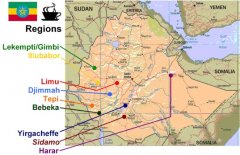
Introduction to Ethiopian Coffee, the hometown of Arabica Coffee
Ethiopia is the hometown of Arabica coffee, and it is in the forests of Kaffa that you can see wild Arabica coffee. In Ethiopian, coffee is called Bun or Buna, and coffee beans (coffeebean) may be translated from Kaffa Bun. Arabica coffee was discovered early in the Harald area, probably from Kafa.

Fresh and bright taste Ethiopian coffee plantation flavor Taste characteristics Variety introduction
Ethiopia is the birthplace of the famous Arabica coffee beans, and people have maintained the tradition of harvesting wild coffee beans. The coffee garden with an altitude of more than 1500 meters has formed a unique coffee terroir after more than a thousand years of evolution and adaptation. Ethiopian coffee grown in the natural wild environment is called wilderness coffee and retains the most primitive coffee beans.